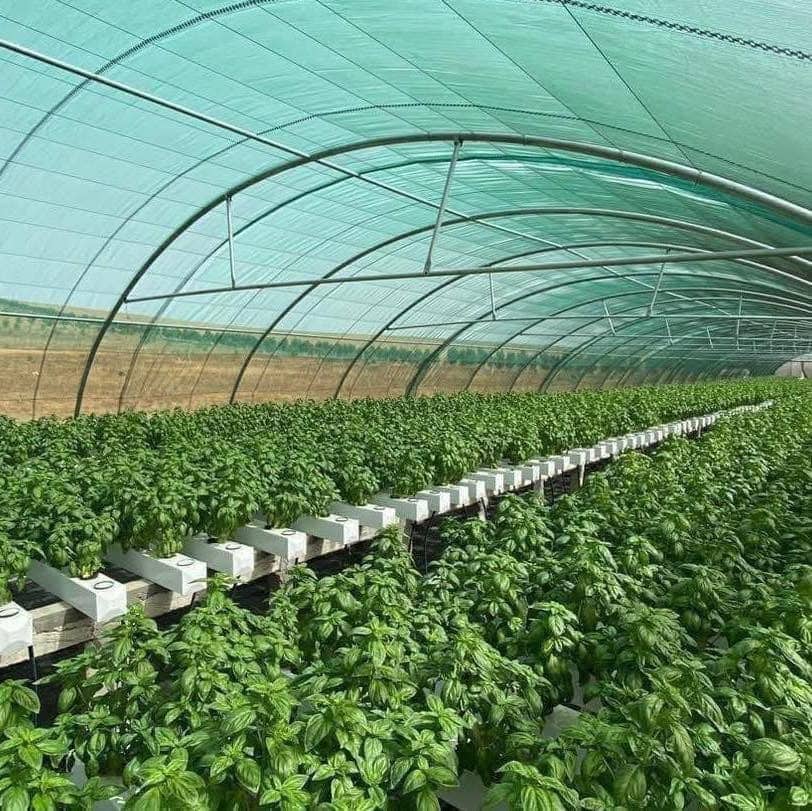
A hydroponic greenhouse is first and foremost an investment: the real question is not its price, but what it brings in. Too many projects are decided on the installation cost alone, when the decisive criterion is profitability over time. Here is how it is built, with examples drawn from our real production data.
The three lines that matter
A greenhouse's profitability comes down to three simple lines: what it brings in, what it costs to run, and the difference between the two.
- Revenue: annual production (in kg) × buy-back price (in DT/kg).
- Annual running costs: agronomic follow-up, electricity, water.
- Net profit: what is left once the running costs are deducted from the revenue.
A concrete example: the 200 m² greenhouse
Take our best-documented model. On a basil crop, a 200 m² greenhouse produces around 2,900 kg per year. With a guaranteed buy-back at 8 DT/kg, this represents 23,200 DT of revenue. After running costs estimated at 3,164.64 DT, the estimated net profit stands at 20,035 DT per year. The full breakdown — plants, yield, running costs — is set out on the 200 m² greenhouse page.
Scaling up: the 500 m² greenhouse
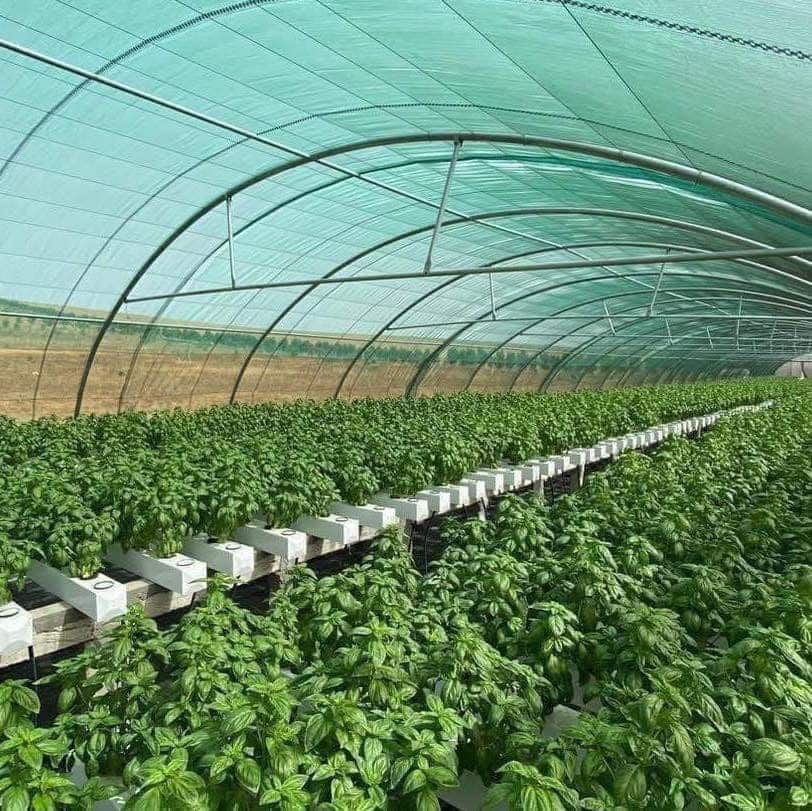
On a larger surface, the proportions shift favourably. The 500 m² greenhouse holds 4,130 plants, targets 7,250 kg per year, that is 58,000 DT of revenue, for an estimated net profit of 50,088 DT. The larger models, such as the 1000 m² greenhouse, or bespoke projects, are the subject of a tailored study rather than standardised figures.
The decisive role of the subsidy
The annual net profit is only half of the equation; the other half is the starting investment. This is where the AIPIA subsidy (up to −55%) comes in: by reducing the initial capital, it sharply shortens the return on investment. A greenhouse funded at half the cost pays for itself twice as fast. We set out this mechanism in our article on AIPIA funding.
Guaranteed buy-back: securing the revenue
A high yield is worth nothing if you do not know who to sell to. This is why the guaranteed buy-back of the production is central: it turns potential production into predictable revenue from the very first harvest. The project developer does not have to search for a commercial outlet in uncertainty — the revenue is framed in advance.
What influences your real profitability
Two identical greenhouses can give different results. How the crop is managed (balancing the solution, pruning, maintaining the NFT system) makes the yield vary; this is why we include training and agronomic follow-up. The steadiness of production, keeping electricity costs under control — which solar power can reduce — and the good health of the circuit also play a part. To understand the technique behind these figures, read the NFT system explained.
Estimating your own profitability
The figures in this article are benchmarks; your project deserves a tailored calculation, factoring in your land, the target size and the subsidised share. Request a free quote: we will draw up an estimate of cost, production and profitability, and we will support you through our consulting if needed.