
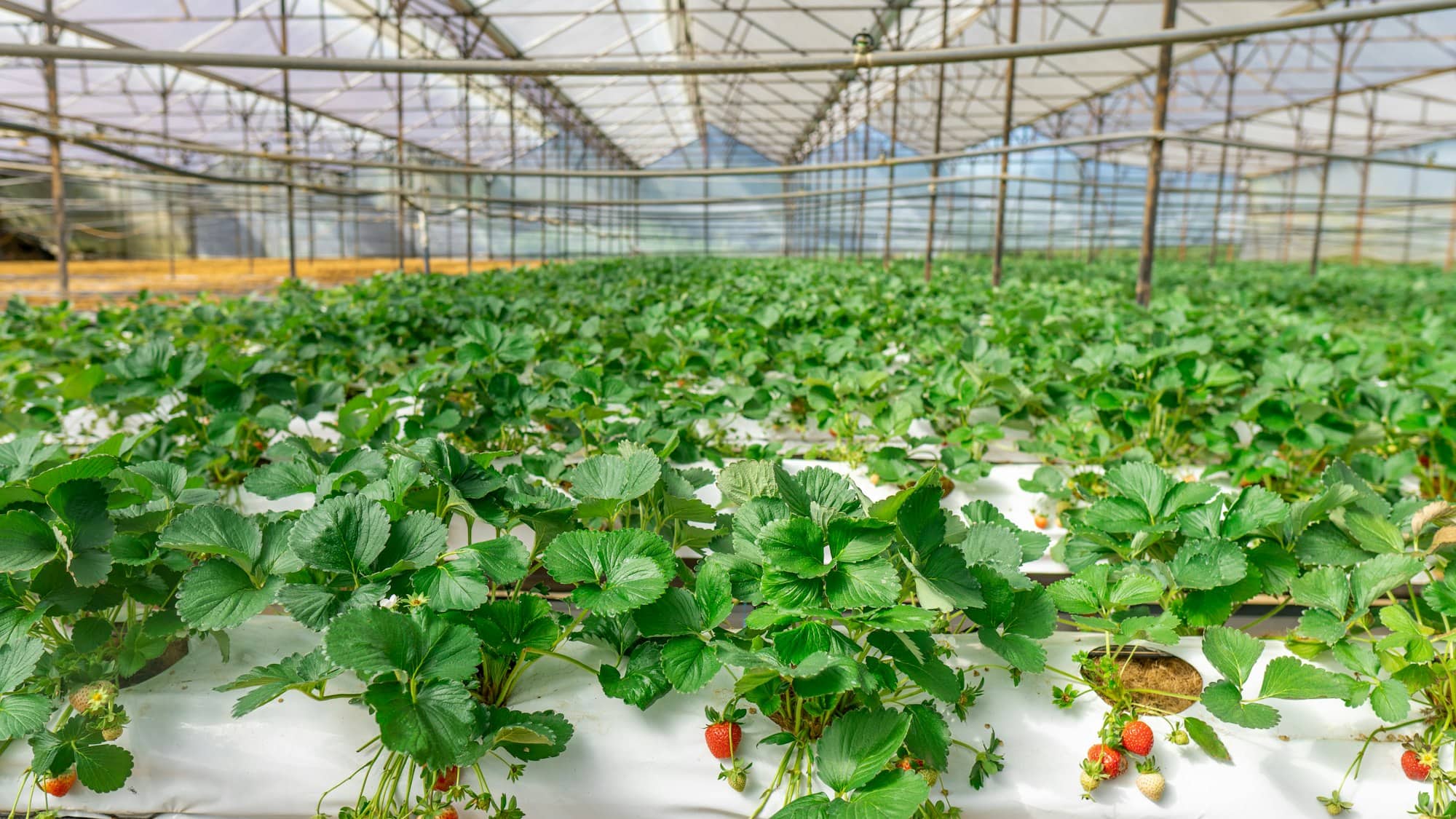
NFT stands for 'Nutrient Film Technique'. It is one of the most widely used hydroponic methods in the world for leafy and aromatic crops, and the one we install in our greenhouses. Its reputation rests on a good compromise: it is high-performing, relatively economical and well suited to commercial production.
The principle of the nutrient film
The plants are arranged in slightly inclined channels. A pump circulates, from a reservoir, a thin film of nutrient solution that flows by gravity along the roots and then returns to the reservoir. The word 'film' is important: the solution does not drown the roots, it grazes them. Part of the roots thus stays in contact with the nutrients, while the other part remains exposed to the air. This balance between nutrition and oxygenation is the key to fast, healthy growth.
The three stages of the circuit
- The nutrient solution is pumped from the reservoir to the top of the channels.
- It flows as a thin film along the roots of the plants, which absorb water and minerals.
- It returns to the reservoir: a closed circuit, economical in water, where the solution is recirculated.
This closed-loop operation explains why NFT uses far less water than open-ground irrigation: nothing is lost to seepage. It is one of the great advantages of hydroponics that we set out in our guide to hydroponics.
Why NFT suits basil
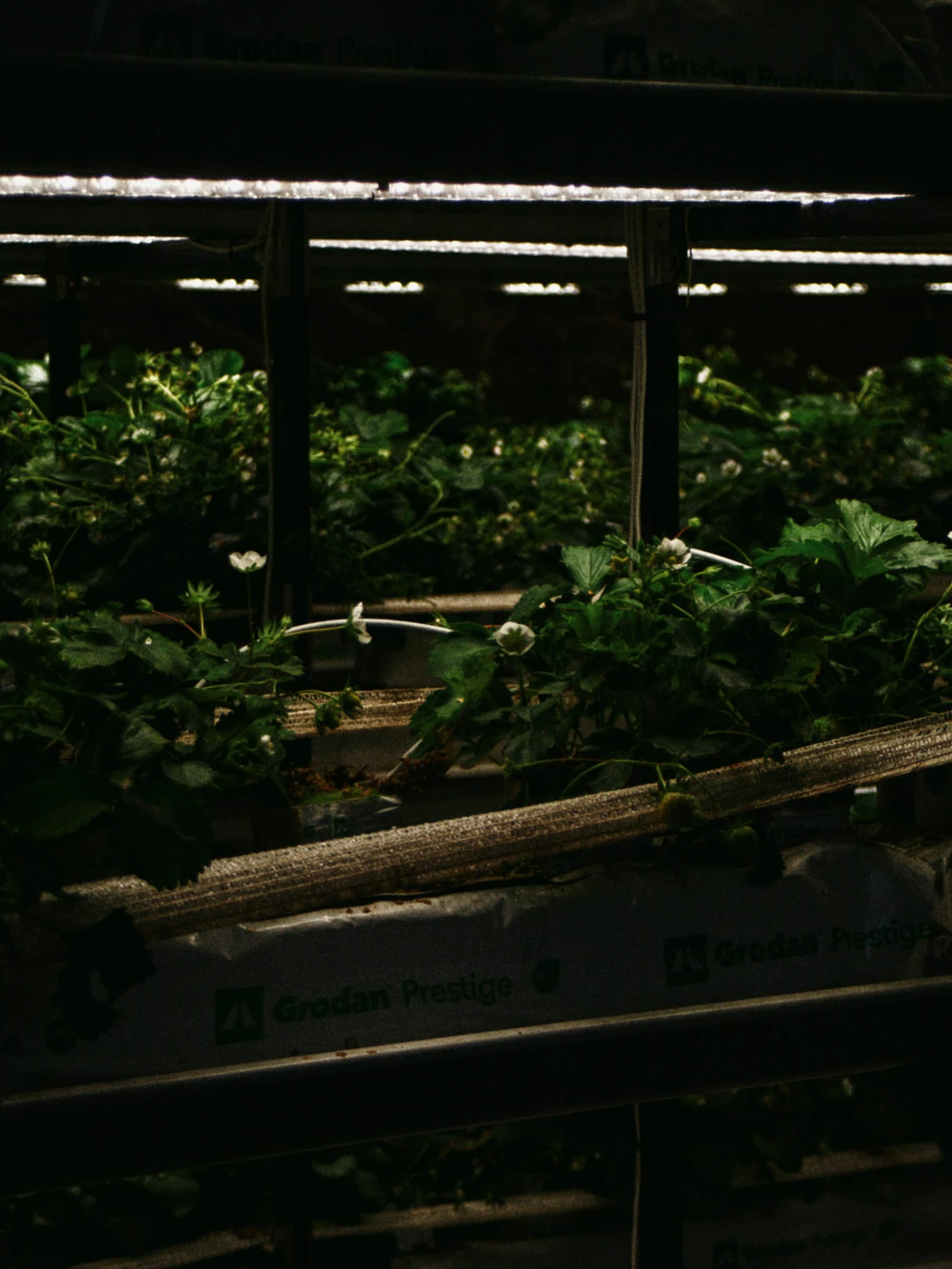
Basil is a leafy crop with short cycles and a light root system — a profile perfectly suited to NFT. It is our most documented crop: the yields by greenhouse size are detailed on the basil crop page. The same principle applies to other leafy greens and aromatics, which opens the way to future crops.
The three tasks that make it a success
A well-installed NFT system is not enough: its performance depends on day-to-day management. Three tasks are decisive.
- Balancing the nutrient solution: monitoring and adjusting the pH and the nutrient concentration.
- Pruning and managing the plants: encouraging even growth and good airflow.
- Maintaining the circuit: keeping the pump, channels and reservoir clean, to avoid blockages.
Reliability: power and continuity
Like any active system, NFT relies on a pump and therefore on electricity. A well-sized system tolerates short interruptions without harm to the crops. To move towards greater autonomy, our recent installations incorporate a solar power supply for the NFT system — a development that reduces reliance on the grid and electricity costs.
Putting it into practice
NFT is at the heart of our turnkey greenhouses: the structure, channels, hydraulic circuit and installation are delivered and calibrated. To see how this translates in practice, explore our hydroponic greenhouses or request a free quote.