Hydroponic crop
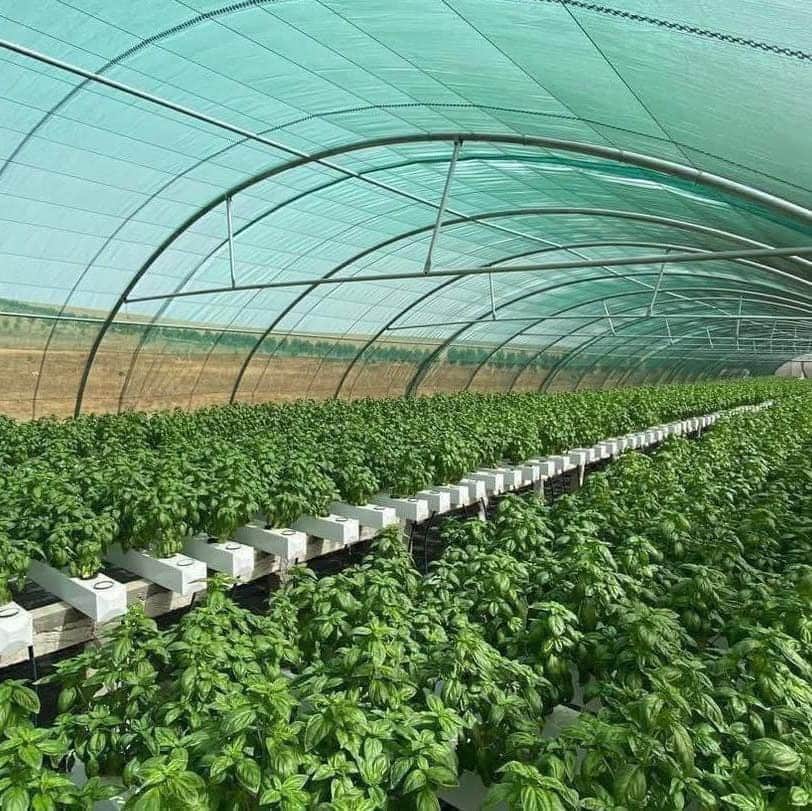
Basil, our most documented NFT crop.
Basil is our most documented NFT crop: a controlled growth cycle, yield measured by greenhouse size and a guaranteed buy-back at 8 DT/kg.
Growth cycle
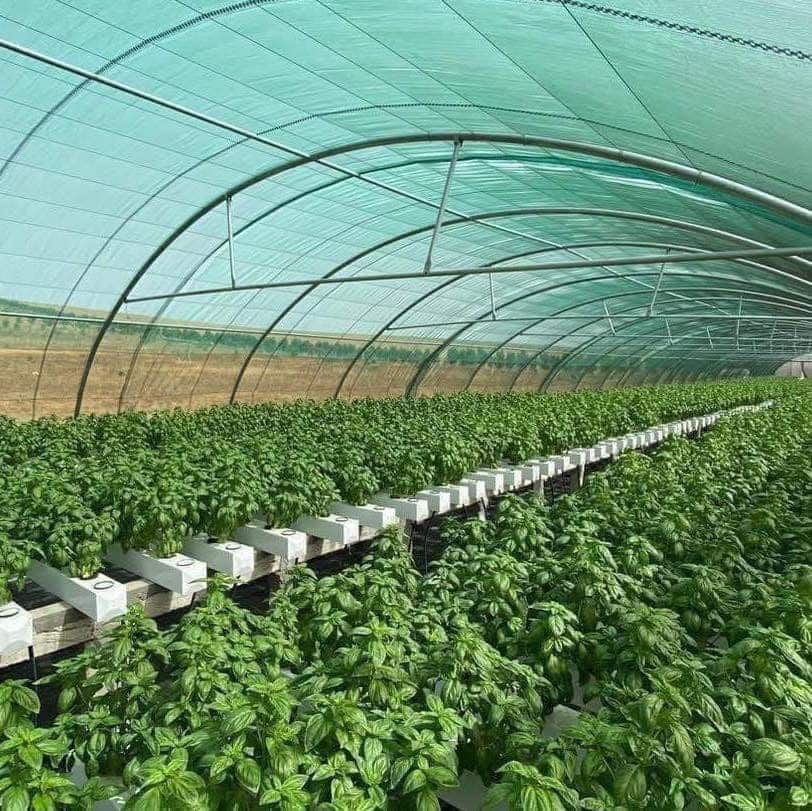
Basil is a crop with short, repeated cycles, well suited to the NFT system: once the circuit is up to speed, production is spread across the year.
Production spread across the year
Yield by greenhouse size
The same data as on the greenhouse pages, presented here by crop.
| Greenhouse | Plants | Yield | Details |
|---|---|---|---|
| 200 m² | 1,652 plants | 2,900 kg / year | See the 200 m² greenhouse |
| 500 m² | 4,130 plants | 7,250 kg / year | See the 500 m² greenhouse |
Guaranteed buy-back
Basil production is bought back at 8 DT/kg, which secures revenue from the very first harvest.
8 DT/kg
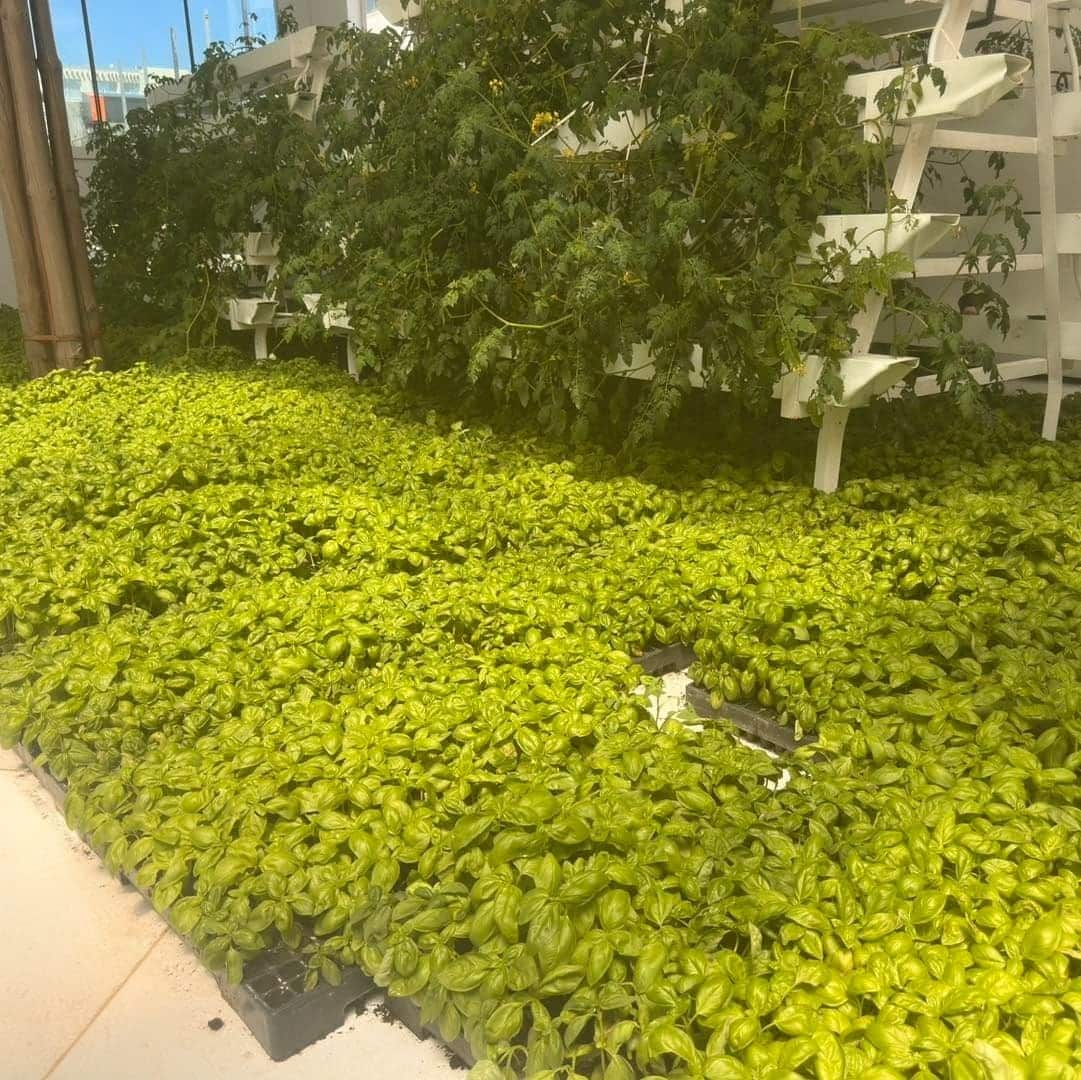
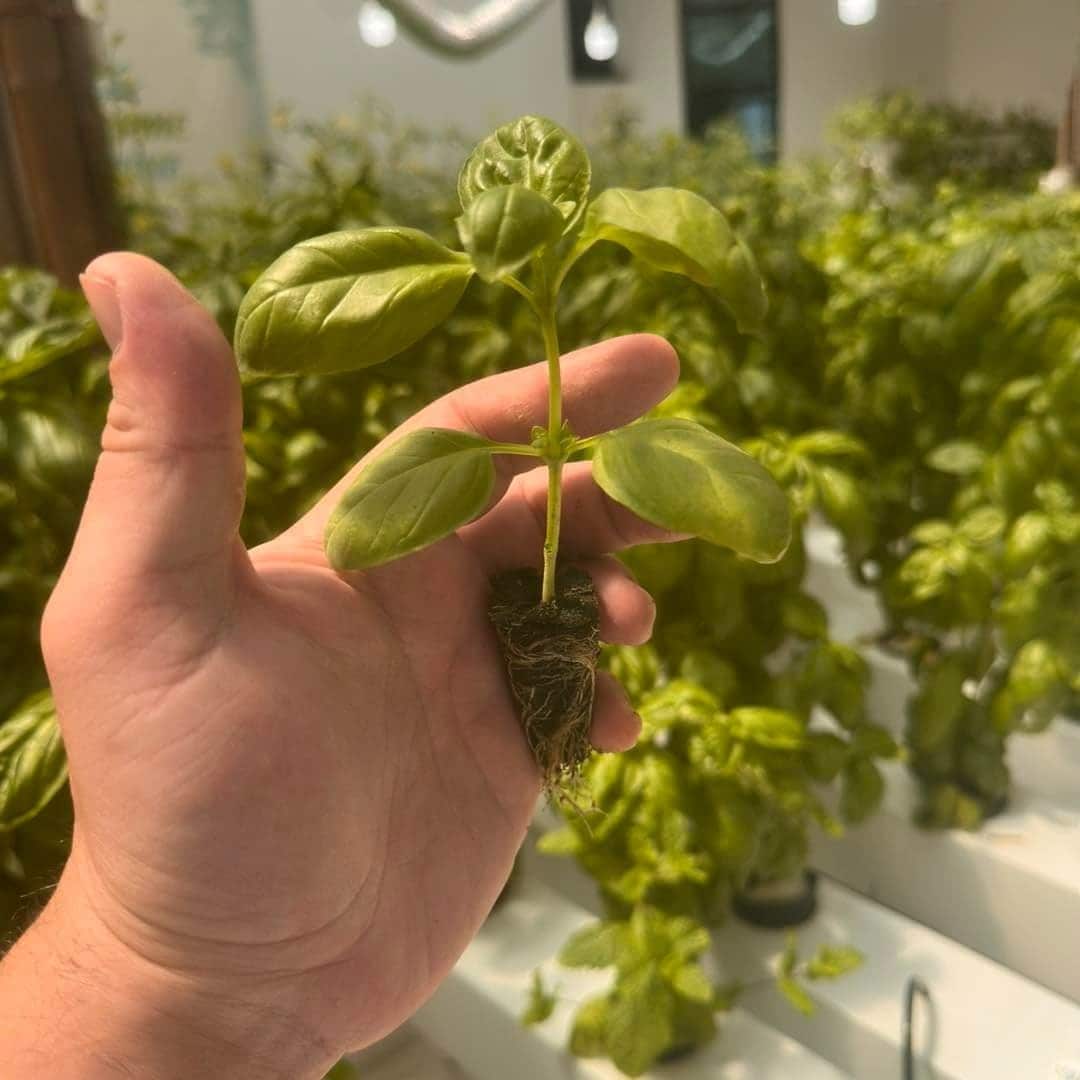
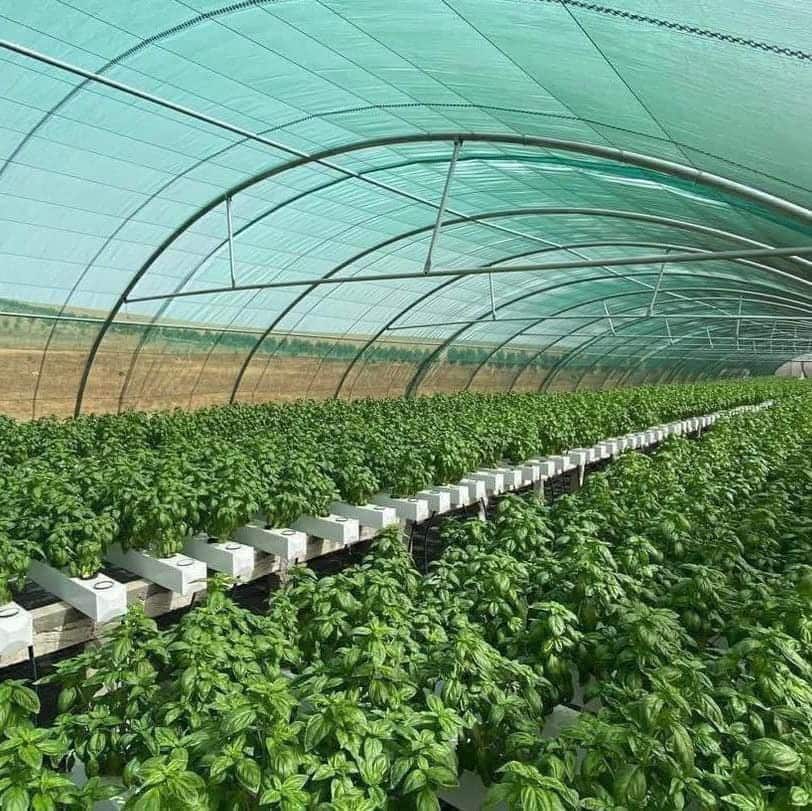
Basil in pictures
From the nursery to the production rows under a hydroponic greenhouse.
Everything you need to know about growing basil in hydroponics
Basil is far more than an aromatic herb: it's a high-value crop, in strong demand, and perfectly suited to NFT hydroponics. Here's why it makes an excellent starting point.
A short cycle and continuous production
Basil grows fast. In the NFT system, once the circuit is up to speed, production is spread across the year rather than concentrated in a short season. This regularity is a major asset for supplying a market reliably.
Short cycles also mean frequent harvests, and therefore cash coming in regularly — a point often underestimated in a farming project.
A measured yield, not an estimated one
Our figures aren't theoretical: a 200 m² greenhouse holds 1,652 plants and targets about 2,900 kg per year; a 500 m² greenhouse rises to 4,130 plants and 7,250 kg. This data comes from our own greenhouses.
Combined with the guaranteed buy-back at 8 DT/kg, it allows a realistic profitability to be calculated, detailed on each greenhouse page.
A crop that forgives little, but is quickly learned
Like any hydroponic crop, basil demands rigour on the nutrient solution and the maintenance of the circuit. These tasks are acquired quickly in training, on real greenhouses, then consolidated with the agronomic follow-up.
Basil grown in NFT
Basil is La Ferme Urbaine's flagship crop: ideal in NFT hydroponics and bought back at a guaranteed price of 8 DT/kg. You start with a robust, highly sought-after plant that is easy to sell year-round.
Why basil first
Basil brings together everything a grower starting out in hydroponics is looking for: a short cycle, vigorous growth, and an excellent affinity with the NFT system. The plant quickly makes use of the water and nutrients supplied to it continuously.
It is also a highly prized herb, present on every table and in countless preparations. This popularity makes production easy to sell and reduces the commercial risk of your first harvests.
By choosing basil to begin with, you learn hydroponic management on a forgiving, regular crop before considering any diversification.
Cultivation under controlled conditions
Under greenhouse, you control the basil's environment throughout its cycle. The nutrient solution recirculates in contact with the roots, giving the plant a constant supply and avoiding sudden swings.
This stable environment translates into uniform plants, clean foliage, and a neat presentation. You grow without soil, and therefore without the constraints of weeding or soil-borne diseases.
Management remains accessible: that is precisely what makes basil an ideal learning crop within an NFT installation.
Consistent quality, harvest after harvest
Consistency is the great strength of greenhouse hydroponics. From one cutting to the next, you find basil that is uniform in appearance, cleanliness, and freshness.
This consistency reassures your buyers and builds loyalty with foodservice and distribution alike, which above all want a reliable, available product.
- Clean foliage, ready to sell
- Freshness preserved through local, continuous production
- Consistent appearance from one harvest to the next
- Clear traceability of closed-loop cultivation
A guaranteed buyback at 8 DT/kg
La Ferme Urbaine commits to buying back your basil at a guaranteed price of 8 DT/kg. This commitment secures your outlet and lets you focus on production rather than on finding buyers.
This commercial visibility is a valuable asset at launch. You know in advance the value of your harvest, which makes your project clearer and more reassuring.
You can therefore plan your harvests with confidence, knowing that every kilogram will find a buyer at the agreed price. That assurance leaves you all the energy you need to nurture quality and steady your volumes.
Solid market potential
Demand for fresh basil is real and recurring, driven by foodservice, grocers, and local supply chains. A product available year-round naturally finds its place against an often seasonal offer.
Backed by the guaranteed buyback, the 3-year agronomic follow-up, and the training, basil provides a reliable commercial foundation to launch your operation. The AIPIA public subsidy, which can reach 55%, further improves the accessibility of your project.
Building on this solid base, you can then calmly consider scaling up your production, at the pace of your market and of the experience you have gained with basil.
Frequently asked questions
What is the yield of basil in hydroponics?
About 2,900 kg/year for a 200 m² greenhouse and 7,250 kg/year for 500 m², in the NFT system with good crop management.
At what price is the basil bought back?
Basil production is bought back at 8 DT/kg, a guaranteed price that secures revenue from the very first harvest.
Does basil grow all year round under a greenhouse?
Yes: under a greenhouse and in the NFT system, production is spread across the year, with short, regular cycles.
Why is basil suited to NFT hydroponics?
It's a leafy crop with short cycles and a light root system — an ideal profile for the nutrient film of the NFT system.
How many basil plants in a greenhouse?
About 1,652 plants in a 200 m² greenhouse and 4,130 plants in a 500 m² greenhouse.
What profitability for a basil greenhouse?
The estimated net profit is about 20,035 DT/year for 200 m² and 50,088 DT/year for 500 m², before subsidy. The detail is on the greenhouse pages.
Do you need experience to grow basil in hydroponics?
No: our training on real greenhouses and the agronomic follow-up make you autonomous step by step.
What maintenance does growing basil require?
Essentially balancing the nutrient solution, pruning the plants and maintaining the NFT circuit — tasks learned in training.
Does hydroponic basil have the same quality as soil-grown?
Yes: the plant receives complete, balanced nutrition. Quality depends above all on crop management, which the follow-up aims to optimise.
How do I estimate basil production on my land?
Request a free quote: we'll price production and profitability based on the greenhouse size you have in mind.
Estimate your basil production
Tell us the plot size you have in mind — we'll price production and profitability.